Why Vladimir Might Be Your New Favorite Handwritten Font
There’s a particular kind of design problem that calls for warmth without clutter, personality without distraction. You need something that feels human, approachable, and quietly confident. That’s exactly where a typeface like Vladimir finds its strength. It’s not trying to shout over everything else in your layout. Instead, it offers a calm, organic presence that brings authenticity to a project without overwhelming it.
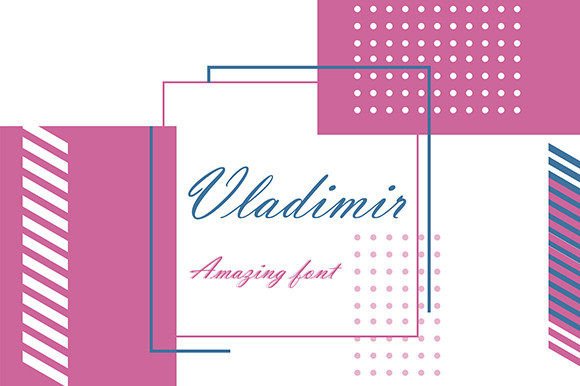
Vladimir is a handwritten font built on simplicity. Its letters flow with gentle, natural curves, and the strokes carry just enough variation to feel crafted by hand. There’s an elegance here that doesn’t feel forced—it’s the kind of font that looks like someone took care with each letter, but without any pretense. The overall aesthetic leans minimalist, which makes it surprisingly adaptable. It doesn’t box you into a single style or era. Instead, it acts as a versatile tool that can support a wide range of creative directions.
A Typeface That Feels Like a Thoughtful Conversation
What makes Vladimir work so well in practice is its balance. It has the organic irregularity you’d expect from a script font, but it’s restrained enough to remain legible even at smaller sizes. The letterforms are open and airy, with consistent spacing that helps maintain readability in longer phrases or sentences. This isn’t a font that demands all the attention—it’s designed to complement your content, not compete with it.
When you look at Vladimir, you’ll notice the subtle details: the way certain letters taper off with a delicate flick, the gentle loops in the ascenders and descenders, and the overall rhythm that gives text set in this typeface a quiet, flowing quality. These characteristics make it especially effective for projects where you want to convey sincerity, care, or a personal touch. Think of it as the typographic equivalent of a handwritten note on quality paper—it feels intentional and human.
Where Vladimir Truly Shines
This creative font has a broad range of applications, but it excels in contexts where personality and approachability matter most. For brand identity work, Vladimir can serve as a distinctive element in logos, packaging, and marketing collateral. It works beautifully for lifestyle brands, boutique businesses, artisan products, and any company that wants to emphasize a human connection. Imagine it on a coffee bag label, a skincare product’s packaging, or the masthead of a wellness blog—it immediately sets a tone that feels genuine.
In editorial design, Vladimir is a natural fit for pull quotes, subheadings, or featured text in magazines and books. It adds visual interest without breaking the flow of the main content. For social media graphics, it brings warmth to Instagram posts, Pinterest pins, and Facebook headers, especially when paired with clean photography or simple illustrations. It’s also a strong choice for wedding invitations, greeting cards, and personal stationery where a handwritten feel is desirable.
Even in digital spaces, Vladimir holds its own. It can be used thoughtfully in web design for hero sections, call-to-action buttons, or accent text—anywhere you want to draw the eye with a personal touch. The key is to use it strategically, not as your primary body copy, but as a complementary element that adds character to your layout.
Pairing Vladimir with Other Fonts
One of the most practical aspects of working with Vladimir is how well it plays with other typefaces. Because it’s a handwritten font with a minimalist style, it pairs effectively with a wide range of serif and sans serif fonts. For a clean, modern look, try combining it with a geometric sans serif like Montserrat or Futura. The contrast between Vladimir’s organic shapes and the structured geometry of a sans serif creates visual interest while maintaining balance.
If you’re aiming for something more traditional or editorial, pair it with a classic serif like Garamond or Minion. The combination of a refined serif with Vladimir’s casual elegance can produce layouts that feel both sophisticated and approachable. When testing font pairings, pay attention to scale and weight. Vladimir tends to work best as a secondary or accent font, so let your primary typeface handle the heavy lifting in terms of hierarchy and readability.
Practical Considerations for Real Projects
Before committing to Vladimir for a project, take time to evaluate how it fits your specific needs. Here are a few things to keep in mind:
- Readability first. While Vladimir is legible for short to medium-length text, it’s not designed for dense body copy. Use it where it can breathe—headlines, quotes, labels, or accent text.
- Test at multiple sizes. Fonts can look very different at 12px versus 48px. Make sure Vladimir maintains its charm and clarity at the sizes you plan to use.
- Review the character set. Check that the font includes all the glyphs, numbers, and punctuation you’ll need, especially if you’re working on multilingual projects or specialized content.
- Understand the licensing. If you’re using Vladimir for commercial work—client projects, products for sale, or branded materials—ensure your license covers that use. Most premium fonts offer clear commercial licensing, but it’s always worth double-checking.
Another practical tip: print samples if you’re working on physical materials. Handwritten fonts can behave differently in print than on screen, particularly at smaller sizes or on textured paper. Seeing Vladimir in context will help you make better decisions about size, color, and placement.
Building Consistency and Recognition
A consistent typographic voice is one of the most underrated elements of strong design. When you use a font like Vladimir across multiple touchpoints—your website, social media, packaging, and printed materials—you create a cohesive visual language that reinforces your brand’s personality. Over time, audiences begin to associate that style with your business, which builds recognition and trust.
That said, consistency doesn’t mean rigidity. Vladimir’s versatility allows you to adapt it to different contexts while maintaining a unified feel. You might use it in a large, bold style for a product launch graphic, then scale it down for subtle accents in email headers. The underlying character remains the same, which helps tie everything together.
A Final Thought on Choosing the Right Font
Selecting a typeface is ultimately about fit. It’s not about chasing trends or picking the most elaborate display font you can find. It’s about finding a tool that serves your project’s goals and resonates with your audience. Vladimir succeeds because it doesn’t try to be more than it is. It offers a quiet, authentic presence that enhances a design without stealing the spotlight.
If your work calls for a touch of humanity—a sense that real people are behind the words and images—Vladimir deserves a place in your toolkit. It’s a creative font that balances beauty with practicality, making it a valuable design asset for anyone who values thoughtful, effective design.