Gulp: A Fun Display Font for Modern Branding
If you’ve spent any time scrolling through design inspiration lately, you’ve likely noticed a shift away from the ultra-minimalist, rigid typography of the past decade. Brands are craving personality. They want typefaces that feel human, approachable, and unapologetically distinct. Enter Gulp, a display font that doesn’t just sit on the page—it bounces. It is a chunky, spirited typeface that brings a much-needed sense of joy to modern typography. But is it right for your project? As a designer who balances aesthetics with strategy, I want to walk you through how to actually use a font like this effectively, moving beyond the "fun" factor to see how it impacts your bottom line and brand identity.
The Personality Behind the Glyphs
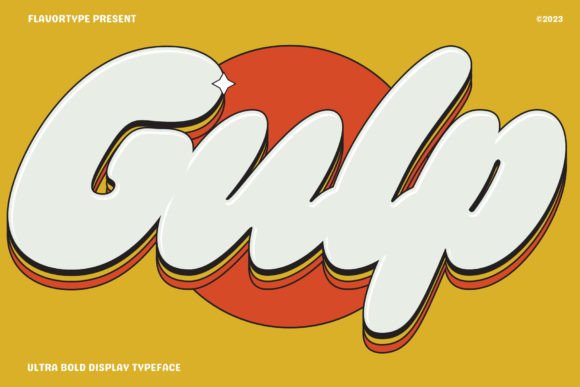
Understanding a display font is about reading its mood. Gulp is not a font for legal disclaimers or dense body copy. Its visual characteristics are defined by generous, rounded letterforms and a distinct "chunky" weight that commands attention immediately. It carries a friendly vibe that feels nostalgic yet modern, bridging the gap between playful cartoons and sophisticated modern typography. Unlike a strict serif font or a clean sans serif font, Gulp has a softness to it. The terminals are rounded, the spacing is generally tight to create a solid visual block, and the overall impression is one of confidence without arrogance.
This personality makes it incredibly effective for specific emotional triggers. If your brand strategy relies on trust, approachability, and energy, this typeface speaks that language fluently. It avoids the stiffness of corporate jargon. Instead, it feels like a conversation with a helpful friend. However, because it is so expressive, it requires a careful hand. Using it for an entire paragraph would be exhausting for the reader; its strength lies in its ability to act as a visual anchor.
Strategic Applications: Where Gulp Shines
The versatility of a creative font like Gulp allows it to cross boundaries between digital and physical media. However, knowing where to deploy it is key to maintaining professionalism.
Digital Dominance: Web and Social
In the realm of web design, attention spans are short. Gulp is excellent for hero sections on landing pages where you need to communicate a value proposition in three seconds or less. Because of its thick strokes, it renders beautifully at large sizes on high-resolution screens. For social media graphics, this font is a powerhouse. In a feed dominated by standard system fonts, Gulp stops the scroll. It works perfectly for Instagram Stories, quote graphics, and promotional banners where high impact is necessary.
Physical Presence: Packaging and Print
When it comes to packaging design, shelf appeal is everything. Gulp is ideal for products targeting families, children, or the food and beverage industry. Imagine a bag of artisanal coffee or a box of organic snacks; the chunky nature of the font suggests substance and satisfaction. In editorial design, you might use it for pull quotes or feature headers in a magazine to break up the monotony of standard body text. It adds a rhythm to the layout that keeps the reader engaged.
Brand Identity and Logo Design
Using a display font for logo design can be tricky, but when done right, it creates instant recognition. Gulp is a strong candidate for brands that want to appear accessible. Think of bakeries, creative agencies, or lifestyle blogs. It establishes a brand identity that feels welcoming. However, if your brand is in a highly formal industry like law or finance, this font would likely clash with your audience's expectations.
Mastering the Mechanics: Pairing and Hierarchy
The biggest mistake I see with premium fonts like Gulp is the lack of contrast. Because Gulp is loud and expressive, it needs a quiet partner. This is where font pairing becomes an art form.
The Rule of Contrast: Never pair Gulp with another display font. It will look chaotic. Instead, pair it with a neutral sans serif font or a classic serif font. For example, using a geometric sans serif for your subheadings and body copy allows Gulp to own the main headlines without visual competition. The clean lines of the supporting font make the quirks of Gulp feel intentional rather than messy.
Visual Hierarchy: Use Gulp to establish the "Big Idea." It should be the first thing the eye sees. Use it for H1 headers, product names, or call-to-action buttons. The readability of the font drops significantly if you try to use it for small text. Keep it large—usually above 24pt—to maintain legibility of those chunky details.
Practical Implementation and Licensing
Before you integrate Gulp into your next set of design assets, you need to evaluate the technical and legal specifics. As a commercial font, you must ensure your license covers your specific usage.
- Review the Styles: Check if the font family includes different weights or a script font variation. Sometimes a "fun" family includes a companion script that can add elegance to your layout while maintaining the brand voice.
- Test for Legibility: Type out your specific headlines. Some letters in display fonts can create awkward spacing (kerning). Check your combinations, especially with letters like 'W', 'A', and 'O'.
- Licensing for Scale: If you are a small business owner or entrepreneur, verify if the license covers web embedding (WOFF files) and app usage if you plan to scale your digital presence. A desktop license usually covers print, but digital requires a separate check.
Ultimately, Gulp is more than just a fun font; it is a strategic tool for injecting personality into your communications. Whether you are a blogger looking to refresh your header graphics, a crafter designing packaging, or a marketer launching a new campaign, this typeface offers a distinct voice. Use it wisely, pair it with restraint, and it will help your projects stand out in a crowded visual landscape.