Keyute: A Display Font for the Y2K Revival
The late 1990s and early 2000s are back with a vengeance, and it is not just about low-rise jeans and flip phones. We are seeing a distinct shift in design trends toward the "Y2K" aesthetic—a style defined by chrome textures, high-gloss surfaces, and a distinct sense of technological optimism. If you are a designer, entrepreneur, or content creator looking to tap into this resurgence, typography is your strongest tool. Enter Keyute, a premium font that captures the essence of this era while remaining functional for modern digital landscapes.
Defining the Keyute Aesthetic
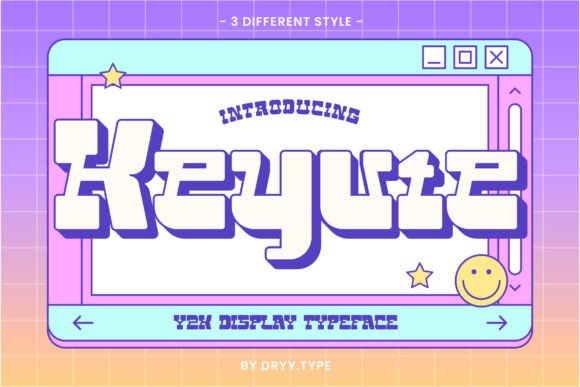
At its core, Keyute is a bold and futuristic display font. It does not try to be neutral or invisible; it demands attention. The design relies on geometric letterforms that feel constructed rather than handwritten. You will notice sharp edges and angular shapes immediately. There is a precision here that mimics the vector graphics and early 3D renderings popular around the turn of the millennium.
However, Keyute is not merely a carbon copy of 90s tech fonts. It possesses a specific energy and dynamism. The letterforms are often wide and stable, yet the sharp cuts in the strokes give the typeface a sense of movement. It feels fast. It feels loud. For a brand strategist, this visual personality is invaluable. When you choose a typeface like Keyute, you are not just picking letters; you are adopting a voice that says, "We are here, we are modern, and we are not afraid to be seen."
Where Keyute Makes an Impact
Understanding where to use a creative font like Keyute is just as important as the font itself. Because it is a display typeface, it shines brightest in short bursts of text. It is not designed for long-form body copy in a novel or a technical manual. Instead, think of it as the headline act.
For logo design, Keyute offers a strong foundation. Its geometric structure ensures that a logo will scale well from a favicon on a browser tab to a billboard. The angular nature of the letters creates distinct negative space, which helps in creating a recognizable brand identity. If you are launching a streetwear brand, a tech startup, a podcast about digital culture, or a line of energy drinks, this font aligns perfectly with that high-energy market.
In editorial design and packaging design, Keyute works exceptionally well for pull quotes, section headers, and product names. Imagine a magazine cover featuring a headline in Keyute; the sharp edges will cut through the noise of a busy cover image. Similarly, on packaging, the font’s futuristic vibe can make a product feel innovative before the customer even reads the description.
Practical Application in Digital and Print
When integrating Keyute into your web design or social media graphics, you are working with a tool built for engagement. On social platforms like Instagram or TikTok, users scroll rapidly. A standard serif or sans serif font might be ignored, but the distinct Y2K flair of Keyute can stop the scroll. It is excellent for "Swipe Up" call-to-actions, sale announcements, or profile headers that need to pop against a busy background.
For small business owners and marketers, consistency is key. Using Keyute across your digital assets helps build a cohesive visual language. If your brand voice is energetic, youthful, and slightly retro-futuristic, this typeface acts as a visual anchor. It helps bridge the gap between your website headers, your email subject lines, and your physical business cards.
Navigating Font Pairings and Readability
No font exists in a vacuum. One of the most practical aspects of using a bold display font is knowing how to pair it. Because Keyute is so expressive, it requires a grounding partner.
- The Neutral Balance: Pair Keyute with a clean, geometric sans serif font. A typeface with low contrast and simple shapes will allow Keyute to be the star of the show without creating visual chaos. This is ideal for body text on websites where Keyute handles the H1 and H2 tags.
- The Retro Contrast: For a thematic look, you might pair it with a monospaced font that mimics old computer code. This reinforces the Y2K theme but be careful not to overdo it. You want a nod to the aesthetic, not a costume party.
- The Soft Touch: Interestingly, pairing a sharp, geometric font like Keyute with a soft, rounded sans serif can create a pleasing tension. The sharpness of the display font is softened by the friendly approachability of the body text.
Readability is a major consideration. While Keyute is legible for headlines, you must test it at the size you intend to use. If you are using it for a poster, ensure the kerning (the space between letters) is adjusted correctly. Sometimes, geometric fonts with tight spacing can merge together at a distance. Always print a proof or view it on a mobile device to ensure the message is clear.
Making the Decision: Licensing and Usage
For designers and agencies, understanding the licensing of a commercial font is non-negotiable. When you invest in Keyute, you are typically securing a license that covers both digital and physical applications. This is crucial for entrepreneurs. You need to know that your brand identity is legally protected and that you have the rights to use the design assets on merchandise, software, and advertising.
Before finalizing your choice, evaluate the project fit. Does your audience appreciate nostalgia? Does your product promise innovation? If the answer is yes, Keyute is likely a strong candidate. It is a creative font that bridges the gap between a nostalgic aesthetic and a forward-thinking mindset.
Ultimately, typography is about communication. Keyute communicates confidence, energy, and a distinct stylistic point of view. By incorporating it thoughtfully into your design assets, you can create visuals that not only look good but also resonate deeply with a generation that remembers the dawn of the digital age and a new generation discovering it for the first time. Whether for a one-off poster or a complete rebrand, Keyute offers a unique visual signature that is hard to replicate with standard fonts.