Hattinand: Crafting Elegance in Every Letterform
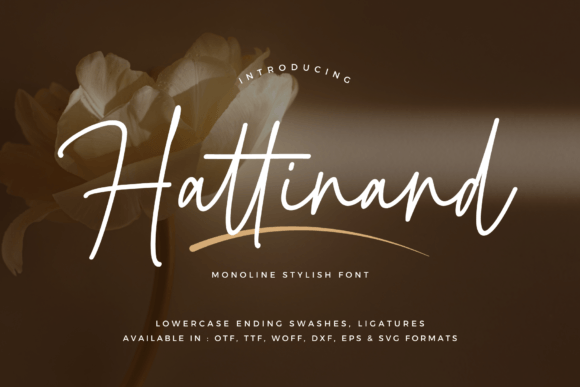
In the world of design, the choice of typography can make or break a project. A font isn't just a collection of letters; it's the voice of your brand, the tone of your message, and a critical component of your visual identity. For those seeking a balance between modern flair and timeless sophistication, the Hattinand typeface presents a compelling solution. This sleek monoline script font, with its carefully crafted alternates and ligatures, offers a unique blend of elegance and practicality that can elevate a wide range of creative endeavors.
The Anatomy of a Versatile Script
At its core, Hattinand is a script font defined by its consistent, single-weight stroke, a hallmark of the monoline style. This gives it a clean, contemporary feel that avoids the sometimes overly formal or casual extremes of other script typefaces. The beauty of Hattinand lies in its details: the delicate curves, the smooth connections between letters, and the thoughtful alternates that allow for customization. These stylistic options provide designers with the tools to create unique wordmarks and headlines that feel both personal and polished.
Unlike many handwritten fonts that can sacrifice legibility for character, Hattinand maintains excellent readability. The letterforms are distinct, and the spacing is carefully considered, ensuring that text set in Hattinand is easy to read, even at smaller sizes or in shorter paragraphs. This makes it a premium font that doesn’t just look good—it functions well. Its personality is one of approachable elegance, making it suitable for projects that aim to feel sophisticated yet inviting.
Where Hattinand Truly Shines
Understanding a font's character is one thing; knowing where to deploy it is another. Hattinand’s versatility is its greatest strength, making it a valuable design asset across numerous applications.
- Branding and Logo Design: For businesses in the lifestyle, fashion, beauty, or artisanal food sectors, Hattinand can form the cornerstone of a brand identity. Its elegant script style is perfect for creating memorable logos, monograms, and brand marks that convey quality and care. It pairs beautifully with a clean sans serif font for body text, creating a balanced and professional typographic hierarchy.
- Marketing and Advertising: In digital and print advertising, grabbing attention is paramount. Hattinand excels as a display font for headlines, call-to-action buttons, and promotional graphics. Its stylish appearance can make social media posts, email headers, and web banners stand out, adding a touch of sophistication that encourages engagement. For packaging design, it can lend a handcrafted, premium feel to product labels and boxes.
- Editorial and Web Design: While not intended for long blocks of body copy, Hattinand is a superb choice for editorial accents. Think pull quotes, chapter titles, or magazine feature headings. In web design, it can be used strategically for site headers, hero text, or navigation menus on creative portfolios, adding personality without compromising the user experience. It’s a creative font that enhances visual storytelling.
- Personal Projects and Craft: Beyond commercial use, Hattinand is a joy for personal projects. It’s ideal for wedding invitations, greeting cards, inspirational quote graphics, and craft projects. Its clean lines make it easy to work with in design software, and the alternates allow for a personalized touch that generic fonts can’t offer.
Making Hattinand Work for Your Project
Choosing the right typeface involves more than just aesthetic preference. Here’s practical guidance for integrating Hattinand into your workflow.
Evaluating Fit and Font Pairings
First, consider your project’s goals. If you’re aiming for a modern, elegant, and slightly feminine or artisanal feel, Hattinand is likely a strong candidate. Next, think about font pairing. Hattinand’s monoline structure pairs exceptionally well with geometric or humanist sans serif fonts like Montserrat, Poppins, or Lato. For a more classic look, a simple, clean serif font can also work. The key is contrast: let Hattinand be the star for headlines and use a neutral companion for supporting text.
Testing for Readability and Hierarchy
Always test your chosen font in context. View Hattinand at the actual size it will be used—on a mobile screen, a printed brochure, or a product label. Check the legibility of individual letters and the flow of connected words. Use the provided alternates and ligatures to refine the look, ensuring letter combinations like "th," "st," or "ll" connect smoothly. This testing phase is crucial for establishing a clear visual hierarchy that guides the viewer’s eye naturally.
Understanding Licensing and Inclusion
As a commercial font, ensure you have the appropriate license for your intended use, whether it’s for a client project, a commercial product, or personal work. Review the font package to understand what’s included: the number of styles, the range of alternates, and any additional glyphs. A well-designed modern typography asset like Hattinand will often come with extensive character sets and OpenType features, giving you greater creative control.
In a landscape saturated with generic typefaces, choosing a font with distinct character like Hattinand can make a significant difference. It’s not about following a trend, but about selecting a tool that aligns with your project’s voice and enhances your message. By understanding its strengths and applying it thoughtfully, you can leverage this elegant script to create designs that are not only beautiful but also effective and memorable.