Hortens: A Medieval Typeface for Bold, Historic Designs
Carved in Stone: The Visual Power of Hortens
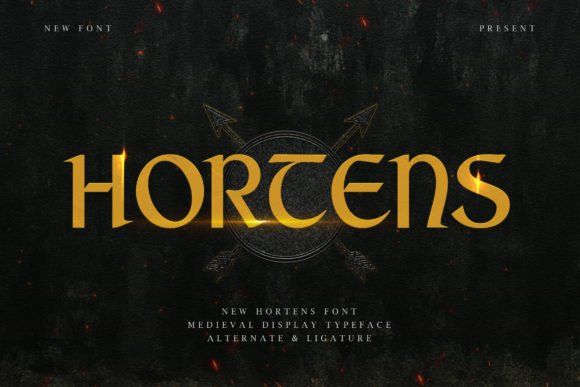
Stepping back in time to an era of knights, castles, and epic tales is a powerful design move. It requires a typeface that doesn’t just suggest a historical period but embodies its very essence. Hortens is that font. This premium display font is a masterclass in medieval-inspired design, offering a direct and unapologetically bold connection to the past. Its letterforms are defined by sharp, angular strokes and intricate, chiseled details, making each character look as though it was painstakingly carved from a block of stone. This isn’t a subtle nod to history; it’s a full-throated declaration of grandeur.
The personality of Hortens is one of strength, authority, and timeless storytelling. As a serif font, its decorative serifs aren’t merely functional—they are part of its ornate, architectural character. This gives it a distinct presence that commands attention in a crowded visual space. Unlike a clean, modern typography choice, Hortens brings texture and weight to a design. Its appeal lies in its authenticity; it feels less like a digital file and more like a historical artifact, ready to lend its gravitas to your creative projects.
Where Hortens Truly Shines: Practical Applications
Understanding a font’s strengths is key to using it effectively. Hortens is a specialized creative font, and its power is unleashed in the right context. It’s a workhorse for projects that demand a sense of history, fantasy, or rustic craftsmanship. Think beyond the obvious and consider where its bold character can solve a design problem or elevate a concept.
- Branding & Logo Design: For a craft brewery, a historical reenactment society, a specialty bookstore, or a fantasy-themed escape room, a logo built with Hortens instantly communicates the brand’s core identity. It tells customers exactly what kind of experience to expect before they read a single word of copy.
- Packaging Design: Imagine a label for a small-batch mead, a hot sauce with a fiery name, or artisanal goods from a medieval fair. Hortens provides the perfect visual shorthand, creating an immediate connection with the product’s story and quality.
- Editorial & Publishing: For book covers in the fantasy, historical fiction, or adventure genres, this typeface is a natural fit. It can also be used for chapter headings, drop caps, or pull quotes in magazines and blogs that cover history, gaming, or tabletop RPGs, adding a layer of thematic immersion.
- Events & Entertainment: Posters, tickets, and social media graphics for a Renaissance fair, a LARP event, a historical lecture, or a theatrical production of a classic play will benefit immensely from the authentic feel of Hortens. It sets the mood before the event even begins.
- Digital & Personal Projects: In the world of video games, particularly in UI elements for RPGs or strategy games, Hortens can help build the world. For personal use, it’s fantastic for creating custom invitations for a themed party, unique T-shirt designs, or even a striking tattoo concept.
Integrating Hortens: A Guide for Designers and Creators
Using a powerful display font like Hortens effectively requires more than just dropping it into a layout. It demands thoughtful application to ensure it enhances, rather than overwhelms, your design. Here’s how to approach integrating this medieval typeface into your work.
Evaluating Project Fit and Readability
First, be honest about your project’s needs. Hortens is a headline font. Its intricate details and high-contrast forms make it a poor choice for long blocks of body text, where readability is paramount. Its strength is in short, impactful bursts—a headline, a logo, a single powerful word. For body copy, you’ll need a complementary font. A clean, neutral sans serif font often provides the perfect counterbalance, allowing the bold personality of Hortens to take center stage without causing visual fatigue. When testing, always view your design at the intended size to ensure the letterforms remain clear and legible.
Mastering Font Pairing and Hierarchy
The key to professional typography is creating a clear visual hierarchy. Use Hortens for your primary headline to grab attention. Then, choose a secondary font for subheadings and a tertiary, highly readable font for paragraphs. A classic pairing might be Hortens for the main title, a simpler serif font for the subtitle, and a versatile sans serif for the body text. This structure guides the viewer’s eye through the content logically. Experiment with different pairings to see what best serves your project’s tone. The contrast between the ornate, historical Hortens and a simple, modern font can create a dynamic and engaging composition.
Leveraging Styles and Commercial Licensing
A quality premium font often comes with more than just the standard uppercase and lowercase letters. Check what’s included with the Hortens font family. Are there alternate characters, ligatures (special connected letter pairs), or stylistic sets that can add extra flair to your design? These details can elevate a good design to a great one. Furthermore, if your project is commercial—a product for sale, a client’s brand, a monetized YouTube channel—ensure you have the correct commercial license. This is a non-negotiable step for any professional or business owner. A proper license protects you legally and supports the type designers who create these valuable design assets.
Ultimately, Hortens is more than just a set of letters. It’s a storytelling tool, a brand-building asset, and a direct portal to a bygone era. By understanding its personality and applying it with intention, you can create designs that are not only visually striking but also rich with narrative and meaning. It’s a typeface for those who want to build a brand identity with depth, create marketing materials that resonate, and design visuals that tell a compelling story.