Why Closer Might Be the Slab Serif Your Brand Needs
Every designer hits that point in a project where the typeface selection feels like the final, crucial puzzle piece. You’ve nailed the concept, the color palette is set, and the layout is clean—but the fonts you’re cycling through just aren’t landing. They’re either too rigid, too whimsical, or lack the specific character required to make the design pop. If you are hunting for a typeface that balances structure with personality, it might be time to look closer at the font actually named Closer.
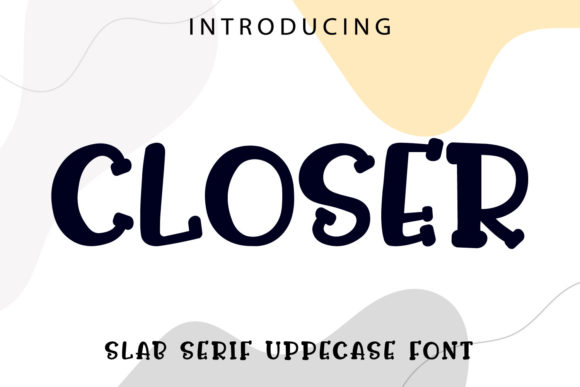
At its core, Closer is a fun slab serif font that refuses to be boring. It occupies a unique space in modern typography where geometric precision meets handcrafted charm. Unlike traditional slab serifs that can sometimes feel heavy or industrial—think of old typewriter keys or heavy machinery branding—Closer brings a lighter, more approachable vibe. It retains the sturdy, grounded feel of a serif but infuses it with a subtle playfulness that makes it incredibly versatile. If you are a creative font hunter looking for something that feels bespoke without the custom commission price tag, this typeface deserves your attention.
The Anatomy of Approachable Design
When we talk about the visual characteristics of Closer, we have to discuss its geometry. The letterforms are built on a foundation of confidence. The serifs are present and functional, giving the text a strong baseline and excellent readability, but they aren’t aggressive. They soften the edges of the communication. Every letter in this premium font has been crafted with a unique touch. You’ll notice subtle curves and varying weights within the strokes that give the text a "bouncy" rhythm when set in a headline. This isn't a static, lifeless block of text; it’s a display font that moves with the eye.
The appeal lies in its versatility as a creative font. It manages to be masculine and feminine simultaneously. It feels nostalgic, perhaps reminiscent of vintage signage or classic children’s books, yet it sits firmly in the contemporary landscape of web design and social media graphics. Because it is a slab serif font, it commands attention in headlines. It has the "voice" of a friendly expert—someone who knows what they are talking about but isn't afraid to smile while saying it. This makes Closer an exceptional tool for brand identity work where you need to establish trust quickly without feeling stuffy or overly corporate.
Practical Applications: From Logos to Merchandise
Theory is nice, but application is where a font earns its keep. Where does Closer actually work best? Based on its construction and stylistic traits, it shines brightest in projects that require a strong visual hierarchy paired with a warm tone.
Logo Design and Branding
For entrepreneurs and small business owners, choosing a display font for a logo is a high-stakes decision. Closer offers a fantastic solution for brands that want to appear established yet approachable. Imagine a boutique coffee roaster, a handmade pottery studio, or a modern landscaping company using this typeface. It provides the necessary weight for a logo to be recognizable at a distance—on a storefront window or a business card—while the "fun" aspect of the design ensures it doesn't look generic. It creates an instant emotional connection, which is the holy grail of brand identity.
Merchandise and Apparel
If you are in the business of creating T-shirts, mugs, or tote bags, you know that legibility is king. However, style is the queen that makes the sale. Closer is arguably the best choice for creating quotes and typographic art on merchandise. Because the letters have such distinct personalities, a simple phrase typeset in Closer becomes a piece of art. It looks great on cotton textures and digital mockups alike. It has that "hand-lettered" aesthetic that is so popular in the crafting world, but because it is a professional typeface, the spacing and kerning are mathematically perfect, saving you hours of manual adjustment.
Editorial and Packaging Design
Don't limit this font to just logos. In editorial design, such as magazine headers or blog post titles, Closer can break up the monotony of standard sans-serifs. It works beautifully as a pull-quote font, drawing the reader's eye to key insights. In packaging design, where shelf presence is everything, the unique silhouette of this font can help a product stand out against competitors using standard corporate fonts. It suggests that the product inside is made with care and creativity.
Mastering Font Pairings and Hierarchy
No premium font is an island. To get the most out of Closer, you need to pair it effectively. A common mistake designers make is pairing a display font with another ornate typeface, which creates visual chaos. Closer has enough personality that it needs a quiet partner.
The best strategy is to contrast the style. Pair Closer with a clean, geometric sans serif font. The simplicity of the sans serif will act as a canvas, allowing the slab serif to shine in headlines. For example, using Closer for your main headings and a font like Montserrat or Lato for your body text creates a professional, balanced look. This contrast helps establish a clear visual hierarchy, guiding the reader from the headline to the body copy seamlessly. Avoid pairing it with a script font or a handwritten font unless you are going for a very specific "scrapbook" aesthetic, as the two styles might compete for attention.
Evaluating the Technicals and Licensing
Before you integrate any new design assets into your workflow, a quick technical audit is necessary. First, always test for readability at the size you intend to use. Closer is a display font, meaning it is designed for larger sizes. While it might be legible in short sentences, avoid using it for long paragraphs of body text on a website. The unique quirks of the letters that make it beautiful in a logo can become distracting and cause eye fatigue when read in 12-point size on a screen.
Next, review the included styles. Does the family include bold or italic variations? Having a Closer Bold allows you to create emphasis within your headlines without switching typefaces, maintaining brand consistency. Check the character map as well. A high-quality commercial font often includes stylistic alternates, ligatures, and multi-language support. These extra glyphs can be the difference between a standard design and a polished one.
Finally, respect the licensing. If you are a content creator or a business owner, ensure you have the correct license for your usage. If you are using Closer for a client’s logo design, you generally need to ensure the license covers commercial use and, ideally, allows the logo to be trademarked. If you are using it for social media graphics or web design, a standard web license or desktop license is usually sufficient. Reading the EULA (End User License Agreement) isn't the most exciting part of the creative process, but it protects you legally.
Bringing Your Designs to Life
Ultimately, the tools we choose shape the message we send. Closer is more than just a collection of vectors; it is a communicator of style. It tells your audience that you value aesthetics, but you also value warmth and approachability. Whether you are a blogger trying to make your headers pop, an entrepreneur building a brand identity from scratch, or a crafter designing your next best-selling T-shirt, this typeface offers a robust foundation.
It bridges the gap between the serious authority of a serif font and the playful energy of a creative font. By utilizing Closer, you aren't just picking a font; you are adopting a style that makes your designs come alive. It’s a practical, stylish, and effective addition to any designer's toolkit, proving that sometimes, the best design choices are the ones that bring us just a little bit closer to our audience.